原文出自ENGINEERING Transformative Materials期刊
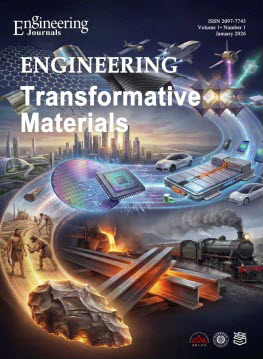
Cite this article:
Jian Luo. Ultrafast Sintering. ENG. TM. DOI:10.2738/ENGTM.2026.0002
文章DOI:10.2738/ENGTM.2026.0002
文章链接:https://doi.org/10.2738/ENGTM.2026.0002
1. 导读
传统陶瓷烧结和粉末冶金通常需要在800–2000 °C下持续数小时,不仅能耗高、成本大,也限制了新材料的快速研发。为了解决上述问题,近日,加州大学圣地亚哥分校(UC San Diego)的骆建(Jian Luo)教授在变革性材料创刊号发表观点性文章,系统梳理了多种“超快烧结”(Ultrafast Sintering)新策略,阐述了超快烧结的机理研究,并为材料快速制备提供了新的技术路线。
2. 图文解读
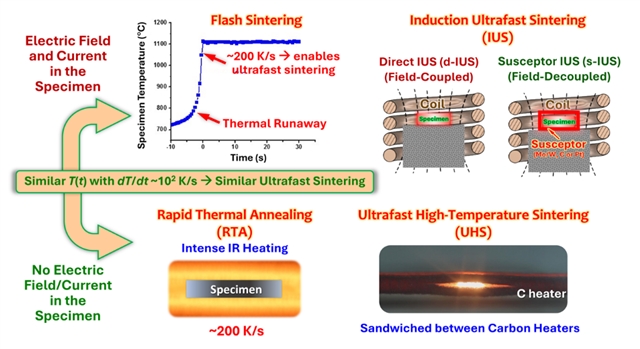
文章的图示总结了从闪烧 (Flash Sintering)到红外快速热处理(Rapid Thermal Annealing, RTA)、超高温烧结(Ultrafast High-temperature Sintering, UHS)、黑光烧结(Blacklight Sintering) 以及最新发展的感应超快烧结(Induction Ultrafast Sintering, IUS)等多种方法,展示了一个不断扩展的超快烧结技术谱系。这些不同技术虽然能量输入方式各异,但其共同核心在于实现约10² K/s量级的超高升温速率,从而在极短时间内实现材料的快速致密化。
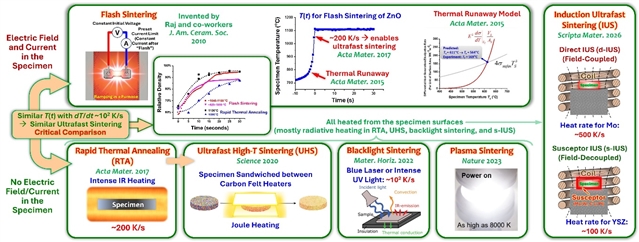
上图展示了从闪烧(Flash Sintering)的机理研究,到发展一系列无需电场的超快烧结技术的演变。 作者研究小组在2015年的机理研究表明,闪烧(Flash Sintering)过程可由热–电耦合失控(coupled thermal-electrical runaway)触发。作者研究小组在2017年的后续研究进一步证明,即使不施加电场,仅依赖超快升温同样能够实现类似的超快致密化过程。这一机理为进一步发展一系列普适的快速烧结方法提供了可行性。这一系列快速烧结方法使用不同的红外辐射(RTA),碳毡电阻/焦耳(UHS),蓝色激光或强紫外线辐射(Blacklight Sintering),等离子体(Plasma Sintering),和直接或受感体间接射频电感(IUS)加热,但都基于2017年发现的超高升温率导致的超快烧结机理。
该文章还强调,反应型超快烧结能够在数秒内同步完成材料合成与致密化,为高熵陶瓷(High-Entropy Cermics)和成分复杂陶瓷(Compositional Complex Ceramics)等新型材料的高通量探索提供了重要平台。
这些进展不仅有望显著降低陶瓷制造的能源消耗,也为以AI为基础新型先进材料开发提供了新颖的高通量块材料制备支持。
3. 作者简介
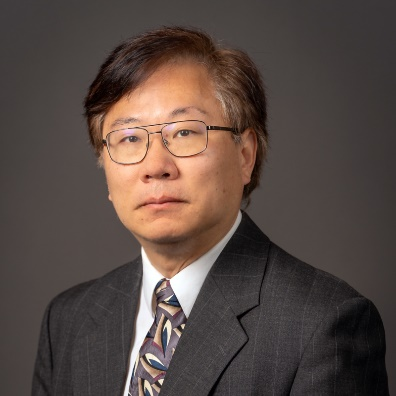
Jian Luo graduated from Tsinghua University in 1994 with dual Bachelor of Engineering degrees in Materials Science and Engineering and Electronics and Computer Technology. After earning his M.S. and Ph.D. degrees from the Massachusetts Institute of Technology in 2001, he spent more than two years in industry at Lucent Technologies and at OFS. In 2003, he joined the faculty at Clemson University as an Assistant Professor and rose through the ranks to Professor of Materials Science and Engineering in 2012. In 2013, he moved to the University of California San Diego as Professor of Chemical and Nano Engineering and Professor of Materials Science and Engineering. The Luo Group’s current research focuses on interfaces in metals and ceramics; high-entropy and compositionally complex ceramics; ultrafast sintering and other advanced materials processing technologies; advanced materials for energy applications and sustainability; high-temperature-stable nanocrystalline alloys and other advanced materials for extreme environments; and various novel structural and functional ceramics. Luo received an NSF CAREER Award in 2005 and an AFOSR Young Investigator Award in 2007. He was named a Vannevar Bush Faculty Fellow in 2014 and a Brimacombe Medalist from The Minerals, Metals & Materials Society in 2019. He is a Fellow of the American Ceramic Society (2016) and ASM International (2022), and was elected to the World Academy of Ceramics in 2021.
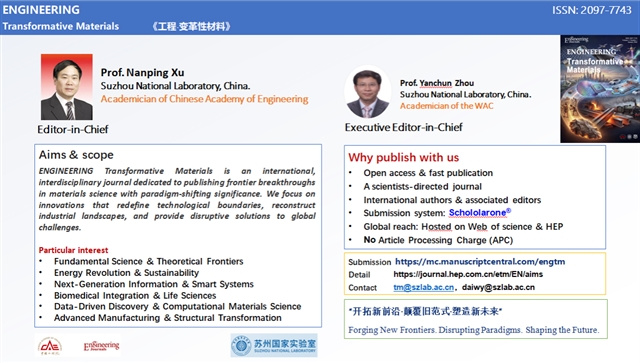
<Engineering Transformative Materials>期刊简介
<Engineering Transformative Materials>近期发表的论文:
1.Mukun He, Junwei Gu,Tunable Low-Frequency Microwave Absorption and Thermal Management through In-Situ Confined Growth of Alloys within Aramid Nanofibers, ENG. Transform. Mater., DOI:10.2738/ENGTM.2026.0001
2.Jian Luo, Ultrafast Sintering, ENG. Transform. Mater., DOI:10.2738/ENGTM.2026.0002
3.Yi-Chi Wang, Lin Gu. Transforming TEM Adaptiveness for Transformative Materials Development, ENG. Transform. Mater., DOI:10.2738/ENGTM.2026.0003
特别声明:本文转载仅仅是出于传播信息的需要,并不意味着代表本网站观点或证实其内容的真实性;如其他媒体、网站或个人从本网站转载使用,须保留本网站注明的“来源”,并自负版权等法律责任;作者如果不希望被转载或者联系转载稿费等事宜,请与我们接洽。